Cabinet Approves ₹2,814 Crore Critical Mineral Processing Scheme
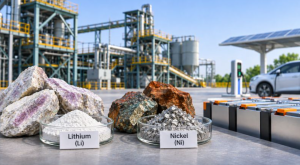
On November 4, 2026, the Union Cabinet approved the ₹2,814 crore Capex Support Scheme to Promote Critical Mineral Processing. It will run for five years, from Financial Year 2026-27 to 2030-31, to establish domestic processing facilities for lithium and nickel.
Subsidy and Plant Capacity
The scheme offers a capital subsidy of 30% of eligible investment for four plants: two for lithium and two for nickel. Each lithium plant must have a minimum capacity of 30,000 tonnes, and each nickel plant 50,000 tonnes. Support is capped at ₹500 crore per beneficiary for lithium projects and ₹900 crore for nickel facilities.
Selection and Intended Impact
Beneficiaries will be selected through technical qualification followed by financial bidding on a least-cost basis. Incentives will be disbursed in three milestone-linked tranches. The scheme aims to reduce dependence on imported refined intermediates and high-purity critical minerals. Union Minister for Coal and Mines G. Kishan Reddy said it would strengthen domestic capabilities and support manufacturing in electronics, semiconductors, batteries and defence. Cobalt is expected to be recovered as a by-product of nickel processing.
Important Facts for Exams
- Nickel ore classes: Nickel ores are classified as oxides or sulfides; laterites are oxide ores, while sulfides commonly occur with iron in minerals such as pentlandite.
- Nickel sulfide processing: Nickel sulfide deposits are often concentrated by froth flotation before pyrometallurgical extraction; the resulting matte then undergoes further refining.
- Lithium ore beneficiation: Lithium carbonate is the principal product of lithium-ore beneficiation and serves as a precursor to other salts used in ceramics and battery materials.
| Related | |
|---|---|