Page-2 of Topic: Accountability

Right to Information in India – UGC-NTA NET Political Science
The Right to Information (RTI) is legislative measure in India that empowers citizens to access information held by public authorities. It aims to encourage transparency and accountability in...
Social Audit – Public Policy as an Instrument of Socio-Economic Development [NET Political Science Notes]
Social audit is a vital mechanism in assessing the effectiveness of public policies and programs in India. It evaluates the social performance of organisations and initiatives. This process...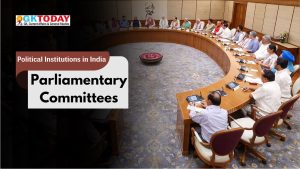
Parliamentary Committees in India – UGC-NTA NET Political Science
Parliamentary Committees are vital components of India’s legislative framework. They enhance the efficiency of Parliament by allowing for detailed examination of bills, budgets, and various issues. These committees...
Judicial Independence [UGC NTA NET Political Science Notes]
Judicial independence is a fundamental principle ensuring that the judiciary operates free from external pressures. It is vital for maintaining the rule of law and protecting individual rights....
Governance, Good Governance, and Democratic Governance – UGC-NTA NET Political Science
Governance is important aspect of political science. It encompasses the processes, institutions, and actors involved in making and implementing decisions. Definition of Governance Governance refers to the processes...
Grievance Redress Systems in India – Ombudsman, Lokpal, and Lokayukta
In India, the grievance redress systems play important role in ensuring good governance and accountability. These systems empower citizens to seek justice against maladministration and corruption. The Ombudsman,...
Governance and the Role of Individuals in India
Governance in India encompasses a complex interplay of systems, processes, and practices through which public institutions manage resources and public affairs. The role of individuals in this framework...
Institutional Mechanisms for Checks and Balances in India
The system of checks and balances is fundamental to the governance structure in India. It ensures that no single entity within the government can exercise unchecked power. This...
Legislative Control over Executive [UGC-NTA NET Political Science]
Legislative control over the executive is a fundamental aspect of governance in India. It ensures that the executive branch remains accountable to the legislature, thereby upholding democratic principles....Parliamentary Committees in India [UGC-NTA NET Political Science Notes]
Parliamentary committees play a vital role in the governance and legislative processes in India. They serve as sub-groups within Parliament, focusing on specific issues to enhance accountability and...