Restoration of Kolhapur Ambabai temple’s Manikarnika Kund is 95% complete
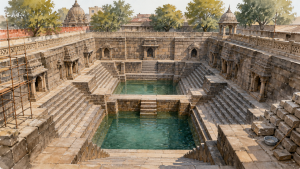
Restoration of the historic Manikarnika Kund at Kolhapur’s Ambabai Temple in Maharashtra was 95% complete as of 1 November 2026. The Western Maharashtra Devasthan Committee is overseeing the work, which has retained the kund’s original structure; it is expected to open to devotees soon.
Structure and restoration
Dated to the 9th–12th centuries, the kund has two square basins about 40 feet deep, stone steps and alcoves used for changing clothes. The site was taken over by the Kolhapur Municipal Corporation in 1957 and later used for a garden and public toilet, after which the kund was buried. A campaign to restore it took place in 2016, and excavation and restoration work followed.
The basins had distinct ritual uses: water from one was taken for the deity’s ceremonial bathing, while water used to bathe the goddess was released into the other. Devotees, ascetics and religious leaders traditionally bathed in the kund before visiting the shrine.
Important Facts for Exams
- Treatment safeguards: Cultural-property conservation guidance favours minimal intervention, reversible methods and full documentation of all work undertaken.
- Direct intervention: Interventive conservation directly engages with an object's material fabric and may address structural stability or cultural requirements.
- Chalukya-period attribution: The Ambabai Temple is generally attributed to the Chalukya period, with its earliest construction commonly placed in the seventh century.
- Kirnotsav solar alignment: During Kirnotsav, the setting sun’s rays pass through the temple and successively illuminate the deity’s feet, chest and face.
| Related | |
|---|---|