Parliamentary and Judicial Oversight of Intelligence Agencies
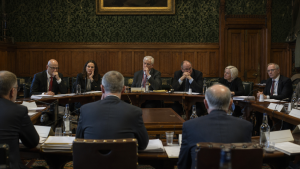
Intelligence agencies require secrecy to protect national security, but their surveillance and covert powers also demand accountability. In the United Kingdom, parliamentary and judicial oversight provide distinct checks on agency conduct, expenditure and the use of investigatory powers, helping reconcile security requirements with civil liberties and lawful governance.
Why Oversight Is Necessary
Intelligence work may involve surveillance, interception and the use of covert human intelligence sources. Secrecy can be necessary to protect operations, personnel and national security, but it can also make misconduct difficult to detect through ordinary public scrutiny. Oversight provides institutional accountability without requiring operational details to be made public.
- Legality: Review helps ensure that intelligence activities remain within statutory powers and comply with applicable legal requirements.
- Civil liberties: Scrutiny is important where surveillance or interception may affect privacy and other rights.
- Security-sector governance: Independent and parliamentary checks help assess whether agencies use their powers responsibly and remain accountable to democratic institutions.
These mechanisms serve different purposes. Parliamentary scrutiny examines the agencies’ policies, administration and operations, while judicial bodies provide a route for complaints and oversight of investigatory powers. Together, they help balance national security with the protection of fundamental freedoms.
UK Intelligence Agencies and Statutory Basis
The United Kingdom’s intelligence community includes three principal agencies with distinct remits. Their statutory foundations define their functions and provide the legal framework within which their activities are conducted.
- Security Service (MI5): The Security Service Act 1989 provided its statutory basis. MI5 focuses primarily on threats within the UK, including terrorism, espionage and proliferation.
- Secret Intelligence Service (SIS/MI6): The Intelligence Services Act 1994 placed MI6 on a statutory footing. Its remit is foreign intelligence, with operations directed only at people outside the British Islands.
- Government Communications Headquarters (GCHQ): The Intelligence Services Act 1994 also gave GCHQ statutory recognition. Its work includes signals intelligence and the security of government communications and information systems.
These agencies have different functions, but oversight arrangements cover the intelligence community as a whole. The distinction between domestic and foreign intelligence remits is particularly relevant when considering the legal basis and limits of agency activity.
Parliamentary Oversight
The principal parliamentary oversight body is the Intelligence and Security Committee of Parliament (ISC). It was established under the Intelligence Services Act 1994 and its framework was updated by the Justice and Security Act 2013.
- Membership: The ISC has nine members drawn from both Houses of Parliament. The Prime Minister appoints them after consulting the Leader of the Opposition.
- Scope: It scrutinises the policies, expenditure, administration and operations of the UK intelligence community, including MI5, MI6 and GCHQ.
- Access: The Committee has access to highly classified information and intelligence-agency personnel, enabling scrutiny that would not be possible through ordinary public proceedings.
- Reporting: The ISC reports directly to Parliament, providing a route for legislative accountability while protecting sensitive national security information.
The Justice and Security Act 2013 gave the ISC a new statutory basis and expanded its remit to include operational matters, in addition to policy and administration. This allows parliamentary scrutiny to extend further into agency activity while recognising the need to safeguard classified material.
Judicial Oversight and Investigatory Powers
Judicial oversight supplies an independent channel for complaints and review. It is especially important where individuals allege that investigatory powers have been used unlawfully or that intelligence activity has infringed their rights.
- Investigatory Powers Tribunal (IPT): Established under the Regulation of Investigatory Powers Act 2000, the IPT handles complaints about the UK intelligence services and alleged human-rights infringements. It can investigate and determine whether investigatory powers used by public authorities, including intelligence agencies, were exercised lawfully.
- Investigatory Powers Commissioner’s Office (IPCO): Established under the Investigatory Powers Act 2016, IPCO oversees the use of investigatory powers by intelligence agencies and law-enforcement bodies. The Investigatory Powers Commissioner is a senior judge who inspects how those powers are used and provides independent assurance of legal compliance.
The Investigatory Powers Act 2016 consolidated and updated the legal framework for investigatory powers. It covers powers including bulk interception, bulk acquisition of communications data and equipment interference, and sets out processes for warrants and oversight. The framework seeks to accommodate security needs while retaining privacy safeguards and independent review.
State Threats Act and Recent Designations
The National Security (State Threats) Act 2026 received Royal Assent on 8 July 2026 and came into force on 17 July 2026. It gives the Home Secretary power to designate bodies involved in state-threat activity and creates offences relating to designated bodies.
- Designation power: The Home Secretary may designate bodies involved in state-threat activity.
- Related offences: Offences cover supporting or assisting designated bodies, as well as obtaining material benefits from them. The maximum sentence is 14 years.
- IRGC: The United Kingdom designated Iran’s Islamic Revolutionary Guard Corps (IRGC) under the Act on 13 July 2026.
The Act is distinct from the statutes governing the intelligence agencies and their oversight. It is relevant to security-sector governance because it creates designation and offence powers, while parliamentary and judicial mechanisms remain important checks on the exercise of state powers.
Key Prelims Takeaways
- Security Service Act 1989: Provides the statutory basis for MI5.
- Intelligence Services Act 1994: Places MI6 and GCHQ on a statutory footing.
- ISC: Parliamentary oversight body established in 1994 and strengthened by the Justice and Security Act 2013.
- IPT: Independent tribunal established under the Regulation of Investigatory Powers Act 2000.
- IPCO and IPA 2016: IPCO oversees investigatory powers; the Act consolidates their legal framework.
- MI6: Its statutory remit is foreign intelligence, with operations only against people outside the British Islands.
- RAF and Royal Navy: The RAF emerged from the merger of the Royal Flying Corps and Royal Naval Air Service; Royal Navy management is delegated by the Defence Council to the Admiralty Board, which directs the Navy Board.
Recent Context
On 1 November 2026, Iran designated the Royal Navy and Royal Air Force as “terrorist organisations” and MI6 as a “hostile group”. Iran described the measures as reciprocal, citing the UK’s 13 July designation of the IRGC under the National Security (State Threats) Act 2026.
| Related | |
|---|---|