Kutch Copper Plans 115 MW Renewable Energy Integration
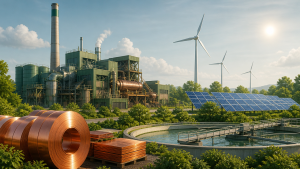
Kutch Copper Ltd, a subsidiary of Adani Enterprises Ltd, plans to integrate 115 megawatts (MW) of renewable energy into its copper refinery operations at Mundra in Gujarat. The plan features in the company’s maiden sustainability report for the financial year 2025–26. Kutch Copper says the renewable-energy integration is intended to reduce operational carbon emissions, conserve water and improve resource efficiency.
Copper smelting and production capacity
Kutch Copper currently operates a copper smelter with a capacity of 500,000 tonnes per annum (TPA). It plans to expand capacity to 1 million TPA, which the company describes as a planned single-location custom smelter of global scale. A copper smelter processes copper-bearing material to produce copper metal. Copper is used in electrical wiring, power transmission, electric vehicles and renewable-energy equipment because of its electrical conductivity.
The Adani Group has committed $1.2 billion to the project. The proposed renewable-energy supply is part of the company’s plans to incorporate environmental, social and governance considerations into its operations.
Water and emissions management
Kutch Copper says it operates using nearly 100 per cent desalinated water and follows a zero-liquid-discharge approach. Desalination removes salts from seawater or brackish water to produce freshwater. Zero-liquid-discharge systems treat wastewater for recovery and reuse, with the objective of avoiding liquid effluent discharge.
The company reports treating 99.8 per cent of its sulphur emissions. Sulphur dioxide is an air pollutant that can form sulphuric acid in the atmosphere and contribute to acid deposition. Industrial emission-control systems can remove sulphur compounds from exhaust gases before their release.
Copper and India’s climate goals
Copper is used in power grids and electrification infrastructure, including equipment associated with clean-energy technologies. India has set a target of achieving net-zero emissions by 2070. The domestic copper industry’s production and environmental-management practices form part of the industrial context for India’s energy transition.
Important Facts for Exams
- Copper has the chemical symbol Cu and atomic number 29.
- Copper is a non-ferrous metal and a good conductor of electricity.
- Smelting uses heat and chemical processes to extract metal from ore or concentrates.
- Desalination converts seawater or brackish water into water with reduced salt content.
India announced its net-zero emissions target for 2070 at the 2021 United Nations Climate Change Conference (COP26).
| Related | |
|---|---|