Indian Vulture Covers 10,767 km Before First Latur Sighting
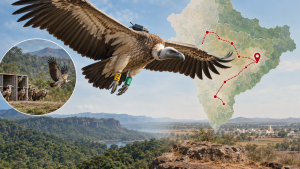
A seven-year-old female Indian vulture was recorded in Ausa tehsil, Latur district, on 18 November 2026—the first recorded presence of the critically endangered species in the district. Tagged F14/M99, the bird has travelled 10,767 km across Maharashtra, Madhya Pradesh and Karnataka.
Tracking the vulture
Bred at the Bombay Natural History Society centre in Pinjore, Haryana, the vulture was one of 15 released earlier in 2026 into the Somthana forest range of Melghat Tiger Reserve. It carried a satellite transmitter and coloured leg bands.
Tracking data shows that the journey began on 28 May and covered the reported distance by 20 November. The route included Akot, Malkapur, Nashik, Thane and Pune in Maharashtra, followed by Vijayapura in Karnataka and a return through Latur.
Wildlife enthusiast Abhijit Rasal first sighted the bird. A team including Deputy Conservator of Forests Amitraj Jadhav, wildlife observer Dhananjay Gutte and Dr Datta Ambekar later confirmed its identity using the leg bands. Experts view the sighting as evidence that captive-bred, released vultures can survive independently and join wild populations. Indian vultures scavenge carcasses; their decline has been linked largely to veterinary diclofenac, which can cause fatal kidney failure.
Important Facts for Exams
- Species separation: The slender-billed vulture was treated as an Indian vulture subspecies until 2001, when nuclear and mitochondrial DNA evidence supported its separation as a species.
- Carcass exposure: Modelling indicates that diclofenac in only about 0.8% of livestock carcasses can cause a significant crash in vulture populations.
- Drug alternative: Meloxicam was suggested as a substitute for diclofenac because it is rapidly metabolised and harmless to vultures.
| Related | |
|---|---|