Gujarat to Get Asia’s First Desert-Themed Night Safari
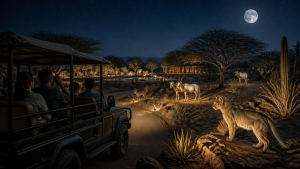
Gujarat has received approval for the Desert Zoological Park and Night Safari at Juna Deesa in Banaskantha district. The project will be developed on about 103 hectares of contiguous government land and is planned as Asia’s first desert-themed drive-through night safari.
Project Location and Approval
The Central Zoo Authority approved the proposal on 12 August 2026. Juna Deesa is located in Banaskantha district in north Gujarat, and the site has been identified for a desert-themed zoological facility under the Gujarat Forest Department.
Layout, Budget and Animal Collection
The estimated budget for the project is ₹542.14 crore. The park is planned to house around 2,700 animals and birds from nearly 83 species, including native, exotic, and avian species.
The design includes a separate day zoo and five dedicated night safari enclosures. The night safari format is intended for viewing nocturnal species after sunset in controlled enclosures.
Species and Conservation Features
The collection is planned to include Indian species such as chinkara, blackbuck, and Indian wild ass. It will also include African species such as cheetahs, giraffes, and zebras, along with Australian fauna such as kangaroos and emus.
The project will use rainwater harvesting, solar energy, sewage treatment, and solid waste management systems. It is also planned as a centre for wildlife conservation breeding, rescue, rehabilitation, and environmental education.
Important Facts for Exams
- The Central Zoo Authority is the statutory body that regulates zoos in India under the Wildlife (Protection) Act, 1972.
- Banaskantha district is located in northern Gujarat and shares a border with Rajasthan.
- Chinkara, blackbuck, and Indian wild ass are protected Indian mammals associated with arid and semi-arid habitats.
- Night safari facilities are designed to allow observation of nocturnal animals under controlled lighting and visitor movement.
Desert Zoological Park
A zoological park is a facility that keeps animals in enclosures for public display, conservation, breeding, and education. A desert-themed zoological park uses habitat design, species selection, and landscape features associated with arid ecosystems.
| Related | |
|---|---|