Demand for Saurashtra’s traditional Motikam beadwork is rising again
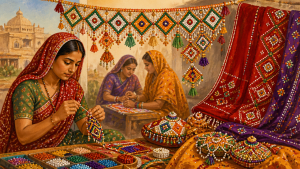
Demand for Motikam, a traditional beadwork craft practised in Amreli and across Gujarat’s Saurashtra region for around 50 years, is rising again, as of 3 November 2026. Women are choosing handmade Motikam products for home décor and religious and social occasions.
Craft and market demand
Artisans use colourful beads, decorative designs and intricate workmanship to make items including torans, wedding chundadis and other handcrafted products. Purchases of these items have increased. A Motikam trader said demand had risen noticeably in the current market.
Changing fashion trends had earlier reduced interest in the craft. Motikam work also provided livelihoods for families in the region, particularly women.
Important Facts for Exams
- Chundadi and bandhani: Bandhani, commonly associated with Gujarati chundadis, is a resist-dyeing method: cloth is tied before dyeing, leaving patterned undyed areas.
- Beadwork techniques: Bead embroidery and bead weaving are distinct techniques: embroidery stitches beads onto a backing, while weaving joins beads directly to one another.
- Gujarati beadwork terminology: Gujarati artisans often call bead embroidery moti bharat, literally “pearl work”; the term describes stitched embellishment rather than the bead material alone.
Originally written on
November 4, 2026
and last modified on
November 4, 2026.
| Related | |
|---|---|