CMC Vellore and TIFR Establish India’s First Human Metabolic Chamber
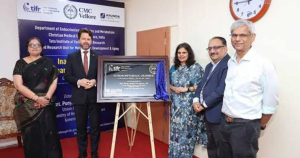
On 23 November 2026, Christian Medical College (CMC), Vellore, Tamil Nadu, unveiled India’s first Human Metabolic Chamber. CMC and the Tata Institute of Fundamental Research’s Advanced Research Unit on Metabolism, Development and Aging (ARUMDA) established it. Union Health and Family Welfare Secretary Punya Salila Srivastava inaugurated the facility.
How the chamber works
The airtight, room-sized whole-room indirect calorimeter can house volunteers for 24 hours or longer; meals pass through an airlock. Researchers monitor oxygen consumption and carbon dioxide output to calculate energy expenditure as participants eat, sleep, rest and undertake routine activity. Measurements track shifts between fat and carbohydrate use and metabolic responses to diet, medicines, activity and sleep. Unlike 20–30-minute tests, the chamber captures a full daily cycle.
Research and institutional support
Research will generate India-specific evidence on metabolism, nutrition, diabetes and obesity, with work also covering ageing, malnutrition and cancer care. The chamber can add measurements to CMC’s Vellore birth cohort, followed since 2010–12. A joint study published in 2026 found overweight and obesity nearly tripled between ages seven and nine, while about one in five children remained thin.
The chamber complements ARUMDA’s National Analytical Facility for Nutrition and Metabolism Research, established in 2025. The project is funded by the Department of Atomic Energy, receives CSR support from Hindustan Unilever Limited, and has expert advice from NUTRIM at Maastricht University and network support from the Embassy of the Kingdom of the Netherlands in India.
Important Facts for Exams
- REE and RQ outputs: Indirect calorimetry estimates energy expenditure or 24-hour calorie needs through resting energy expenditure (REE), and substrate use through respiratory quotient (RQ).
- RQ and fuel type: In indirect calorimetry, an RQ of 1 corresponds to carbohydrate-only burning, while 0.7 corresponds to fat-only burning.
- Gas-exchange assumption: Indirect calorimetry estimates energy production on the assumption that consumed oxygen oxidises fuels and the resulting carbon dioxide is recovered.
| Related | |
|---|---|