Australia Becomes Solomon Islands’ Primary Security Partner
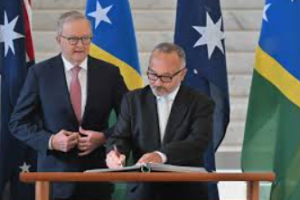
On 25 November 2026, Australian Prime Minister Anthony Albanese and Solomon Islands Prime Minister Matthew Wale signed a bilateral security treaty in Canberra, naming Australia the Solomon Islands’ primary security partner.
Treaty provisions and regional cooperation
The treaty rules out foreign military or security bases in the Solomon Islands and says sensitive infrastructure must remain free from militarisation, foreign interference and unauthorised access. It requires the Solomon Islands to consult Australia before making critical infrastructure or security cooperation agreements with countries outside the Pacific Islands Forum.
Wale said his Cabinet and parliamentary caucus unanimously supported the agreement. Australia committed an additional A740 million over 10 years: A670 million in grants and A70 million in loans, with funds expected to begin flowing in January. Broader reports put total Australian support at about A980 million. The treaty also covers investment in infrastructure, education, renewable energy and sport, enhanced policing services, and improved visa arrangements for Solomon Islanders.
China security pact
Wale said the Solomon Islands had informed Beijing it would not renew its 2022 security pact with China when it expires in April 2027. At the Canberra press conference, however, he declined to confirm or deny reports of non-renewal, citing the pact’s non-disclosure clause. The 2022 agreement provided Chinese police trainers in Honiara.
Important Facts for Exams
- Biketawa crisis framework: The Pacific Islands Forum’s Biketawa Declaration (2000) provides a regional framework for addressing political crises and facilitating collectively approved assistance.
- Rarotonga Treaty scope: The Treaty of Rarotonga restricts nuclear explosive devices and testing in its zone; it does not generally prohibit conventional military bases.
- Melanesian regional grouping: The Melanesian Spearhead Group brings together Fiji, Papua New Guinea, Solomon Islands, Vanuatu and New Caledonia’s FLNKS, supporting subregional cooperation.
| Related | |
|---|---|