Power Ministry Proposes Battery Storage for Larger Rooftop Solar Systems
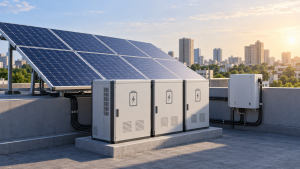
On November 23, 2026, the Union Ministry of Power proposed amendments to the Electricity (Rights of Consumers) Rules, 2020. The draft would require battery storage for larger rooftop solar installations, with the proposed rules scheduled to take effect on April 1, 2028.
Proposed storage requirements
State Electricity Regulatory Commissions (SERCs) would set the capacity threshold above which consumers must install energy storage systems. If a SERC sets no threshold, the requirement would apply to renewable energy installations exceeding 10 kW. Required storage would be at least 20 per cent of daily generation, or another proportion set by the respective SERC.
SERCs could also levy charges on rooftop solar consumers above a specified capacity, taking account of imputed storage costs and network losses. The proposal aims to encourage storage of surplus daytime solar power for evening peak demand and ease grid-management pressures and costs for distribution companies. Consumers could install renewable energy systems elsewhere on their premises, with capacity exceeding their sanctioned load, subject to SERC limits.
Time-of-day tariff schedule
The draft would defer time-of-day tariffs to April 1, 2028, for consumers with maximum demand above 10 kW, and to April 1, 2029, for other non-agricultural consumers.
Important Facts for Exams
- AC connection: Battery storage plants store or release energy as direct current, while electricity networks generally use alternating current, making inverters necessary for connection.
- Advance tariff setting: Time-of-use electricity prices are set in advance and typically change no more than twice yearly, allowing consumers to shift use to cheaper periods.
- State–central regulatory remit: Under the Electricity Act, 2003, State Commissions regulate intra-state electricity, including retail tariffs; the Central Electricity Regulatory Commission principally regulates inter-state matters.
- Net and gross metering: Net metering offsets exported rooftop electricity against imports on a consumer’s bill; gross metering instead credits all generation separately from electricity purchased.
| Related | |
|---|---|