How will the melting of Himalayan glaciers have a far-reaching impact on the water resources of India? (UPSC 2020)
Melting Himalayan glaciers will reshape India’s water future. In the short term, higher melt may raise river flows and flood risk; in the long term, it will reduce dependable supply in the lean season, especially after the “peak water” stage.
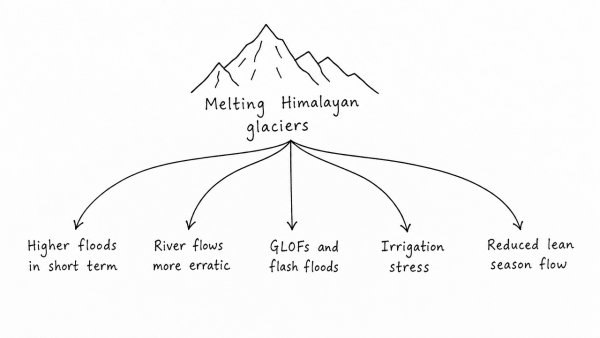
- River regime change: The Indus, Ganga and Brahmaputra depend on glacier-fed flow. As ice reserves shrink, summer and winter discharge will become more erratic.
- Flood and disaster risk: Faster melt, glacial lake expansion and ice-patch collapse can trigger GLOFs and flash floods, damaging lives, farms and infrastructure.
- Irrigation stress: Northern India’s plains depend on these rivers for dry-season irrigation; reduced flows will hurt wheat, rice and other crops.
- Groundwater pressure: Lower river recharge will worsen aquifer decline in the Indo-Gangetic plain.
- Energy loss: Silt-heavy, unstable flows will affect hydropower output and turbine life.
Thus, glacier melt is not just a mountain issue but a basin-wide water security challenge requiring storage, early warning, basin planning and climate adaptation.
Originally written on
September 2, 2026
and last modified on
September 2, 2026.