Critically examine why urban wetlands are experiencing rapid degradation in Indian metropolitan regions. How do these stopover habitats support migratory species while delivering essential urban ecosystem services?
Urban wetlands are living infrastructure, yet metropolitan expansion and pollution rapidly degrade them, threatening biodiversity and urban resilience.
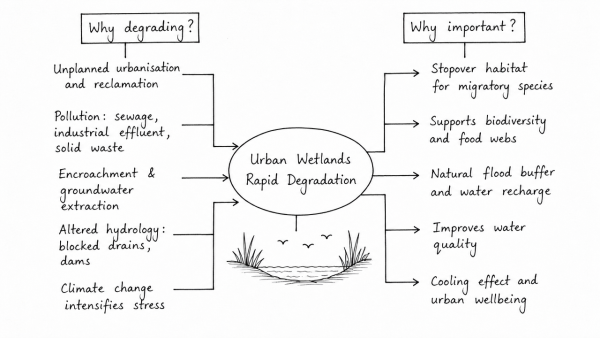
Drivers of degradation
Unplanned urbanisation converts marshes and floodplains into housing, roads, metros and commercial projects. Wetlands are often treated as wasteland, while plans for development, drainage and conservation conflict. Reclamation also severs feeder channels, alters water levels and isolates habitat patches.
Untreated sewage, industrial effluent and dumped solid waste cause nutrient overload, toxic contamination and algal blooms, weakening ecological functions. Encroachment, groundwater extraction and dams compound hydrological stress. Climate change intensifies droughts and rainfall. Weak enforcement compounds pressures. Wetland mapping is incomplete, jurisdiction is split among civic bodies and departments, and smaller or human-made water bodies may fall outside protection. Infrastructure projects often proceed without valuing wetlands as connected systems.
Ecological and urban value
Along the Central Asian Flyway, wetlands provide migratory birds with safe stopovers to rest and refuel. Shallow water, mudflats and marsh vegetation supply fish, insects, seeds and shelter. Birds such as shovelers, sandpipers and bar-headed geese depend on this habitat; their presence can indicate ecosystem health. Isolated, polluted wetlands, however, cannot sustain migration reliably.
They absorb stormwater, reduce peak flows and help limit urban flooding. Wetland soils and plants trap sediments and pollutants; infiltration supports groundwater recharge. Vegetation cools neighbourhoods, stores carbon and sustains fishers and recreation. The East Kolkata Wetlands demonstrate how ecological functions can also support livelihoods.
Cities should protect wetland catchments, restore natural flows and enforce pollution controls, balancing fair development with ecological limits.