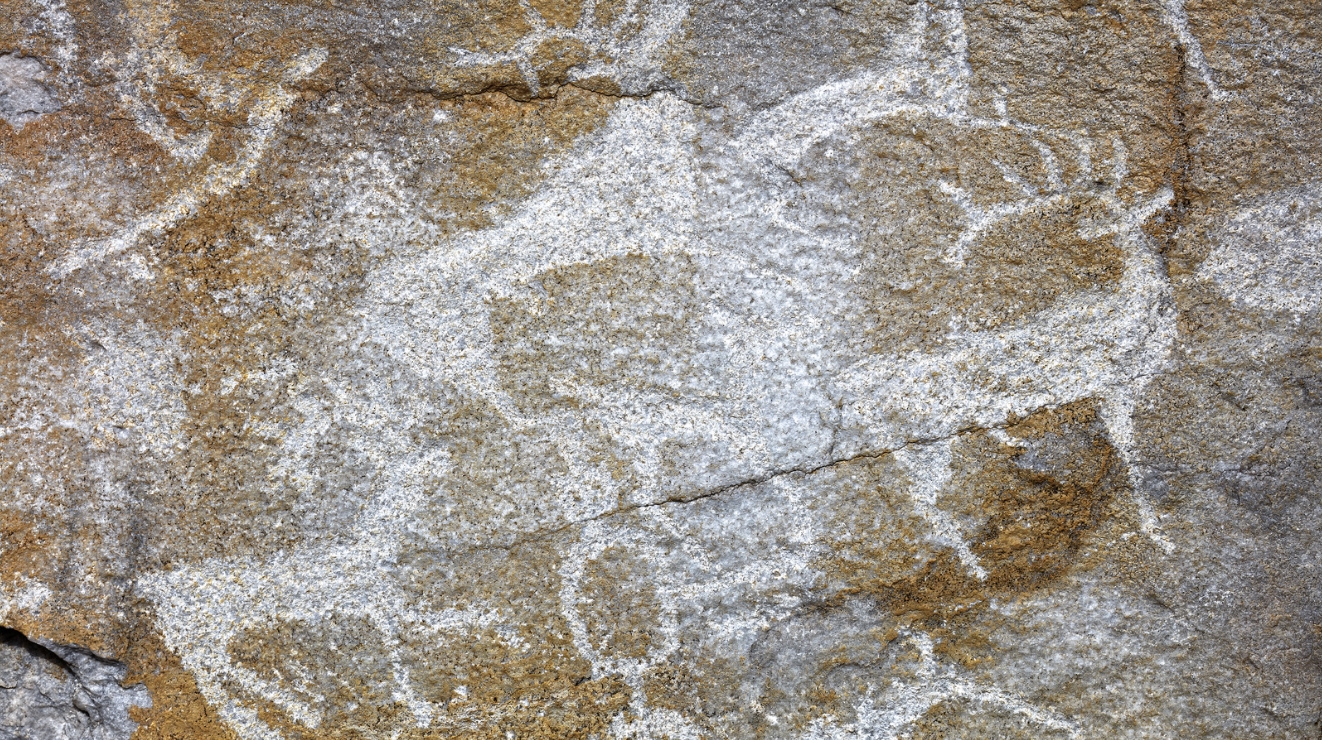
Prehistoric Cave Art in India
Prehistoric cave art serves as the earliest record of human creative expression, social organization, and environmental interaction. Found primarily in rock shelters and caves across the Indian subcontinent, these paintings and engravings provide insights into the daily lives, beliefs, and artistic evolution of early humans from the Palaeolithic to the Mesolithic and Neolithic periods.
Evolution and Chronology
Prehistoric art in India evolved in stages corresponding with major technological and environmental shifts. Artistic maturity reached its peak during the Mesolithic period due to the availability of new tools and a warmer, stable climate.
Upper Palaeolithic Phase
Art from this period is minimal and often consists of linear, stick-like figures. The focus was mainly on large animal motifs, often executed in green or dark red. Human figures were rarely depicted.
Mesolithic Phase
This period produced the most abundant and diverse rock art. Paintings became more dynamic, depicting group activities such as hunting, dancing, and foraging. Artists used multiple colors and developed more intricate compositions.
Neolithic and Chalcolithic Phase
Art from these periods shows increased stylization. Motifs include domestic animals like cattle, scenes of farming, and complex geometric patterns. Figures often appear more decorative and abstract.
Primary Themes and Motifs
The subject matter of cave art reflects the hunter-gatherer economy and the later transition to pastoralism and agriculture.
- Hunting Scenes: Hunters are shown with bows, arrows, and spears chasing deer, wild boar, and rhinoceros.
- Gathering Activities: Paintings depict groups collecting fruits, honey, and tubers.
- Social Life: Themes include group dancing, musical performances, and communal rituals.
- Animal Life: Common animals include elephants, bison, tigers, rhinoceros, sheep, goats, and cattle.
- Symbolic Representations: Geometric patterns, handprints, and abstract signs likely held spiritual or ritualistic importance.
Techniques and Materials
Artists utilized the natural environment to source materials and create long-lasting images.
- Mineral Pigments: The most common pigments were hematite (red ochre) for red, manganese for black, and lime for white.
- Application: Pigments were ground into powder and mixed with water or natural binding agents like animal fat or plant sap.
- Tools: Brushes were likely made from animal hair or twigs. Some images were created using fingers or small stone implements.
- Rock Surfaces: Paintings were executed on the ceilings and walls of natural rock shelters, which provided protection from weather and erosion.
Major Sites and Regional Significance
India possesses thousands of rock art sites, particularly in the Vindhya, Satpura, and Aravalli ranges.
Bhimbetka, Madhya Pradesh
Bhimbetka contains the largest and most extensive collection of prehistoric rock art in the world. Located in the Raisen district, these shelters feature paintings from the Upper Palaeolithic to the medieval period. The site is a UNESCO World Heritage site and offers the most comprehensive sequence of human artistic development.
Pachmarhi, Madhya Pradesh
Located in the Mahadeo Hills, Pachmarhi is known for its high-altitude rock shelters. Paintings here depict vivid hunting scenes, human figures in various postures, and elaborate animal studies.
Mirzapur, Uttar Pradesh
The Vindhyan range in the Mirzapur region contains numerous rock shelters with paintings of hunting, chariots, and horseback riders. These sites are significant for understanding the transition to iron-age motifs.
Kupgal, Karnataka
Famous for its petroglyphs (rock carvings), Kupgal in the Bellary district displays motifs of bulls, humans, and geometric signs. These carvings were made by pecking or engraving the rock surface.
Edakkal, Kerala
Edakkal caves are unique for their carvings, which include human figures and symbols. These are among the few examples of rock engravings in southern India that show cultural interaction between early populations.
Summary of Regional Artistic Features
| Region | Primary Site | Key Characteristic |
| Central India | Bhimbetka | Longest chronological sequence |
| Madhya Pradesh | Pachmarhi | Dynamic group hunting scenes |
| Uttar Pradesh | Mirzapur | Transition to iron-age motifs |
| Karnataka | Kupgal | Focus on petroglyphs and bulls |
| Kerala | Edakkal | Distinctive rock engravings |
Facts and Trivia
- The red pigment used in rock art is primarily iron oxide, known as ochre. This mineral is highly stable, which accounts for the preservation of paintings for thousands of years.
- Early artists often painted over existing images, creating multiple layers of art that allow archaeologists to date the paintings chronologically.Paintings from the Mesolithic period show an increase in the variety of colors, including yellow and white, alongside the traditional red.
- The depiction of hunting scenes often provides clues about the specific species of animals present in the region at the time, some of which are now extinct in those specific areas. Handprints found in some shelters are believed to be a form of individual identification or a ritualistic act.
- Most prehistoric rock art sites are located in naturally occurring rock shelters formed by sandstone or granite. These shelters provided both physical protection and a canvas for early populations.
While some motifs are realistic, many are highly stylized, suggesting that art was not purely descriptive but served social, ritual, or storytelling purposes. The practice of rock art declined with the advent of urban civilization, as artistic expression shifted toward more ephemeral media like textiles or pottery. However, the tradition of rock painting continued in remote tribal communities for centuries after the prehistoric era ended.