
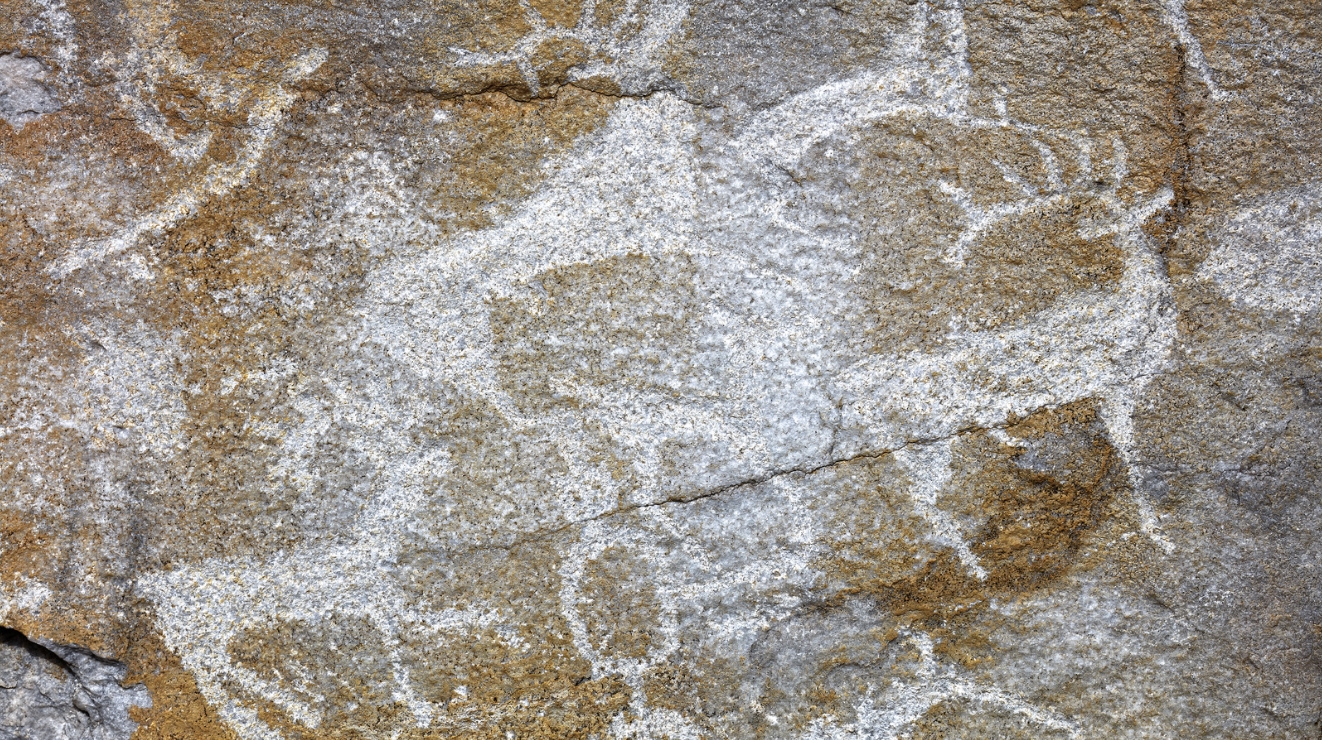
Bhimbetka and Adamgarh Cave Art
Prehistoric cave art provides direct evidence of human creativity, belief systems, and environmental adaptation. Among the numerous sites in India, Bhimbetka and Adamgarh stand out for their extensive rock art traditions.
Bhimbetka Rock Shelters
Located in the Raisen district of Madhya Pradesh, the Bhimbetka rock shelters form the largest collection of prehistoric art in India. The site is a UNESCO World Heritage site situated in the Vindhyan Range.
Chronology and Artistic Phases
The paintings span from the Upper Palaeolithic to the medieval period, offering a long chronological sequence.
- Upper Palaeolithic: Paintings are linear and stick-like, often depicting large animals like bison, tigers, and rhinoceros. Green and dark red pigments are common in this phase.
- Mesolithic: This period shows the greatest diversity and volume of art. Scenes are dynamic, depicting group hunting, honey collection, dancing, and musical performances.
- Chalcolithic and Later: Art becomes more decorative and stylized. Motifs include cattle, human figures in schematic forms, and geometric patterns. These later layers sometimes show riders on horses or elephants, indicating the arrival of later civilizations.
Artistic Features
- Pigments: The primary materials were hematite (red ochre), manganese (black), and white lime. These were ground into powder and mixed with animal fat or vegetable gum as binders.
- Subject Matter: The art captures a 360-degree view of prehistoric life. Hunting scenes dominate, showing the use of spears, bows, and arrows. Domestic scenes include families and social gatherings.
- Spatial Organization: Paintings are found on the ceilings and walls of natural sandstone shelters. Artists often painted over older works, creating overlapping layers that help archaeologists establish the relative chronology of the art.
Adamgarh Rock Shelters
Adamgarh is located in the Hoshangabad district of Madhya Pradesh. While famous for its microlithic tool findings, it also contains a significant collection of rock paintings.
Artistic Characteristics
- Style: The paintings at Adamgarh are largely Mesolithic in character, reflecting the lifestyles of small-scale hunter-gatherer groups.
- Themes: Similar to Bhimbetka, the paintings highlight the interaction between humans and animals. Common motifs include deer, cattle, and scenes of communal dance.
- Techniques: The artists used simple silhouettes and outline drawings. The colors are primarily shades of red and white, applied directly onto the granite rock surfaces.
- Cultural Context: The art provides a visual companion to the archaeological evidence of animal domestication found at the site. The presence of cattle figures in the paintings aligns with the faunal remains that suggest early experiments in pastoralism.
Comparative Overview of Sites
| Feature | Bhimbetka | Adamgarh |
| Region | Raisen, Madhya Pradesh | Hoshangabad, Madhya Pradesh |
| Primary Period | Upper Palaeolithic to Medieval | Mesolithic |
| Rock Type | Sandstone | Granite |
| Key Motif | Dynamic group life and hunting | Pastoral activities and cattle |
| UNESCO Status | Yes | No |
Common Themes in Central Indian Cave Art
Central Indian rock shelters share common stylistic and thematic elements. Both sites illustrate the transition from a purely hunting-gathering economy to one that included early animal management.
- Hunting Strategies: Paintings reveal the use of traps, ambushes, and cooperative hunting techniques. These scenes help reconstruct the tactical planning of early hunters.
- Social Rituals: Art depicts dancers wearing masks or headgear, suggesting the existence of organized social rituals and possibly early forms of shamanism or animistic beliefs.
- Fauna Representation: Artists depicted local animals with high levels of observational detail. The absence of certain species in later paintings at these sites provides clues about changes in the local climate and environment over time.
Facts and Trivia
- The term Bhimbetka is derived from Bhim-bet-ka, implying the seating place of Bhima, the hero from the Mahabharata. This connection highlights how local folklore often incorporates prehistoric sites into the cultural landscape.
- The rock shelters at Bhimbetka were discovered in 1957 by V.S. Wakankar.Hematite, the source of red pigment, is an iron oxide that provides excellent longevity.
- Many of these paintings have remained visible for thousands of years because they were applied in protected rock alcoves where they were shielded from direct sunlight and rain.
- The depiction of riders on horses in the later layers of Bhimbetka paintings helps distinguish between the prehistoric phases and the later historical layers.Adamgarh is equally famous for its evidence of the earliest domestication of cattle in the region.
The cave art acts as a silent witness to this economic shift, as painters moved from depicting wild animals to including domesticated cattle in their compositions. Both sites demonstrate that prehistoric people did not live in isolation; the wide geographic distribution of these art styles suggests that ideas and techniques were exchanged between different human groups across the Vindhyan and Satpura ranges.

Ajoshi
April 27, 2015 at 10:06 amShouldn’t the answer be Japan?
Preeti Madhwal
April 27, 2015 at 3:38 pmAnswer of this question is not correct as per the official list.
Ravi
April 27, 2015 at 9:35 pm‘D’ option should be Indonesia. how can it be Japan..?
anu
April 30, 2015 at 8:27 amjapan has the highest urbanization 91% right?
japan 91%
April 30, 2015 at 1:39 pmjapan 91% urbanistion
Deepinder
April 30, 2015 at 10:40 pmI checked the data on wikipedia and it states Japan as the most urbanised country among the given options. Japan’s % is 91.3 whereas for Brazil it is 90.6%
Pravin Vaity
June 2, 2015 at 9:07 pmPlease give correct answer.