Mesolithic Period in India
The Mesolithic period, or the Middle Stone Age, serves as the transitional phase between the Palaeolithic and Neolithic ages. In India, this period roughly spans from 10,000 BCE to 6,000 BCE, though the dates vary across different regions. It represents a shift toward more sedentary lifestyles and advanced hunting-gathering techniques, characterized primarily by the use of microliths.
Microlithic Technology
The defining feature of the Mesolithic period is the development of microliths. These are tiny stone tools, rarely exceeding 5 centimeters in length.
- Materials used for these tools include chert, chalcedony, agate, and jasper.
- Tools were produced using the pressure-flaking technique, allowing for high precision and standardization.
- Common tool types include blades, crescents, trapezes, triangles, and scrapers.
- These small tools were often attached to wooden or bone handles using natural resins to create composite tools like sickles, spears, and arrows.
Regional Distribution and Key Sites
Mesolithic sites are distributed across diverse ecological zones in India, ranging from river valleys to sand dunes and rocky plateaus.
- Bagor (Rajasthan): Located on the Kothari River, it is one of the largest Mesolithic sites in India, showing evidence of early animal domestication.
- Adamgarh (Madhya Pradesh): Excavations have revealed microliths and evidence of the transition to animal husbandry.
- Langhnaj (Gujarat): This site provides information on burial practices and the use of bone tools alongside microliths.
- Bhimbetka (Madhya Pradesh): While famous for earlier periods, its rock shelters contain extensive Mesolithic occupational layers and paintings.
- Sarai Nahar Rai (Uttar Pradesh): Notable for human skeletal remains that provide insights into the health and stature of Mesolithic populations.
- Mahadaha (Uttar Pradesh): Excavations here revealed organized burial practices and bone ornaments.
- Teri Sites (Tamil Nadu): Coastal sites characterized by unique red sand dunes containing microlithic scatters.
Subsistence and Lifestyle
Mesolithic humans were primarily hunter-gatherers, but they began to exert greater control over their food sources.
- The diet included wild game, fish, birds, and diverse plant products like roots, tubers, and seeds.
- Evidence from sites like Bagor and Adamgarh indicates the beginning of animal domestication, specifically sheep, goats, and cattle.
- Groups became semi-sedentary, often staying in one location for longer periods compared to their nomadic Palaeolithic ancestors.
- The use of fire remained essential for cooking, protection, and clearing vegetation.
Art and Cultural Expression
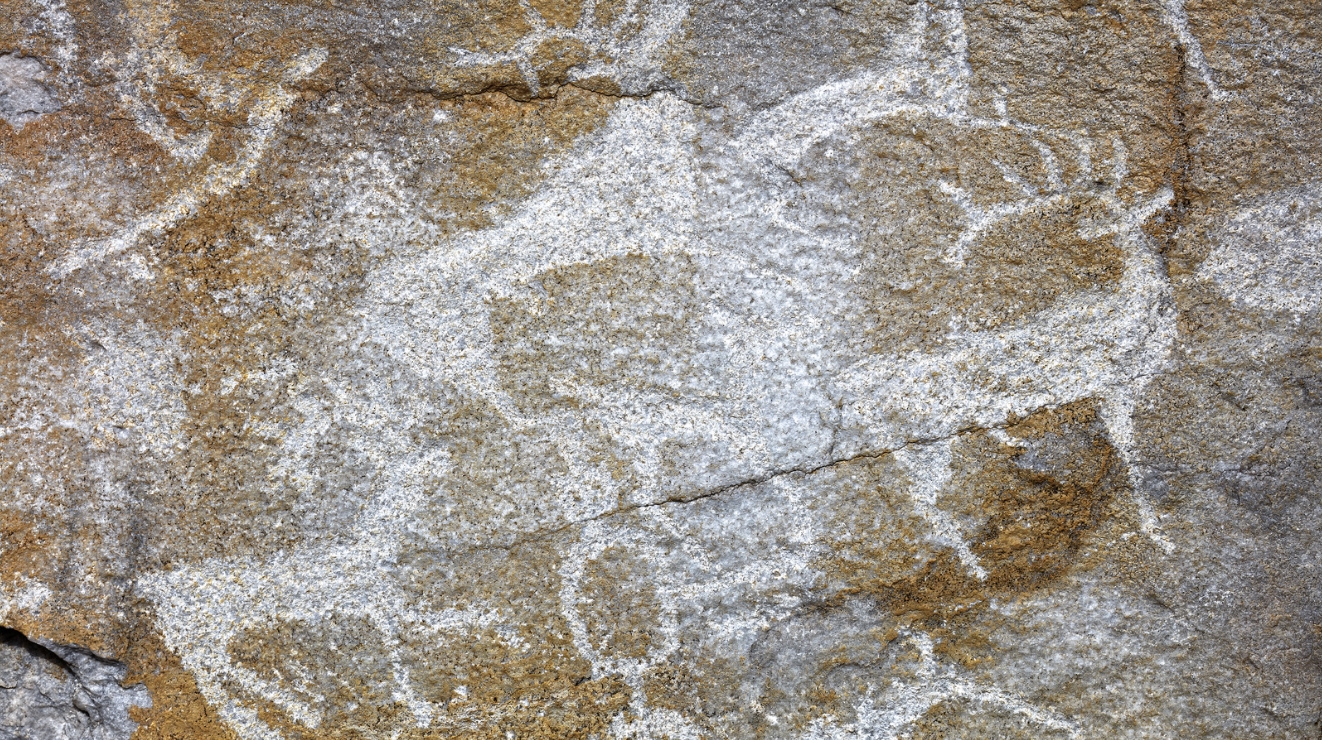
The Mesolithic period is the peak era for rock art in India.
- Paintings are found in rock shelters across central India, with Bhimbetka being the most prominent example.
- Common themes include hunting scenes, animal figures, dancing, gathering, and rituals.
- Human figures are often depicted in dynamic poses, showcasing social activities.
- The pigments used were largely derived from mineral sources like hematite (red ochre).
- Personal ornaments, including necklaces and bangles made of bone, shell, and stone beads, suggest a developing sense of aesthetics and social status.
Burial Practices
Mesolithic societies practiced intentional burial, reflecting complex social or religious beliefs.
- Dead were often buried in pits, sometimes within habitation areas.
- Grave goods, such as stone tools, animal bones, and beads, were frequently placed with the deceased.
- Body positions varied, with some burials showing extended, flexed, or supine postures.
- Multiple burials or burial in cemeteries, as seen at Mahadaha, suggest organized social groups.
Comparison of Stone Age Phases
| Feature | Palaeolithic | Mesolithic | Neolithic |
| Tool Type | Macro-tools (handaxes) | Microliths | Polished stone tools |
| Technology | Core-based | Composite tools | Grinding and polishing |
| Economy | Hunting-gathering | Advanced foraging | Agriculture and herding |
| Settlement | Highly mobile | Semi-sedentary | Sedentary |
Facts and Trivia
- The Mesolithic period is sometimes called the “Microlithic Age” because of the dominance of these small tools.
- The climate during this time became warmer and more humid compared to the late Pleistocene, which led to the growth of dense forests and a wider variety of flora and fauna.
- This environmental shift supported larger human populations and allowed them to occupy previously uninhabited regions.
- The transition to the Neolithic was not uniform across the subcontinent. Some groups remained hunter-gatherers long after others had adopted farming.
- The discovery of human skeletal remains at various sites has provided researchers with data on the biological diversity of these populations.
Studies suggest that Mesolithic people were well-adapted to their specific local environments, utilizing diverse resources to maintain stable food supplies. This period effectively set the stage for the sedentary life and food production that defined the Neolithic revolution.