Mesolithic Economy and Society
The Mesolithic period in India, occurring between approximately 10,000 BCE and 6,000 BCE, represents a critical transition between the hunter-gatherer lifestyle of the Palaeolithic and the food-producing economy of the Neolithic. This era is defined by climatic shifts, improved foraging efficiency, and the emergence of early semi-sedentary social structures.
Economy and Subsistence
Mesolithic populations relied on a diversified economy. They optimized their exploitation of natural resources by shifting from large game hunting to a broader spectrum of smaller animals and plants.
- Hunting and Gathering: The primary economy remained focused on hunting wild animals, trapping birds, and gathering wild fruits, seeds, tubers, and honey.
- Fishing: Access to rivers, lakes, and coastal regions allowed groups to utilize fish, crustaceans, and shellfish as a reliable protein source.
- Early Domestication: Archaeological evidence from sites such as Bagor in Rajasthan and Adamgarh in Madhya Pradesh suggests the beginnings of animal husbandry. Populations began managing herds of sheep, goats, and cattle, marking the first move toward food production.
- Composite Tools: Microlithic technology allowed for the creation of composite tools. Tiny stone blades were hafted into wooden or bone shafts using natural resins to create sickles, harpoons, and arrows, increasing the efficiency of hunting and harvesting wild grasses.
Social Structure and Settlement Patterns
Human groups during the Mesolithic period moved toward semi-sedentary living. While mobility was still practiced for seasonal resource acquisition, groups occupied specific sites for longer durations.
- Settlement Sites: Habitats were established near perennial water sources, river banks, and lake beds. Open-air sites, rock shelters, and cave sites were utilized based on the seasonal availability of resources.
- Group Size: Archaeological evidence suggests the existence of small, egalitarian kin-based groups. These groups likely maintained social networks across regions to exchange materials and knowledge.
- Burial Practices: Intentionally arranged burials indicate the emergence of formal social or religious rituals. Dead individuals were interred in pits, sometimes within the habitation area or in dedicated burial grounds, as observed at Mahadaha in Uttar Pradesh.
- Grave Goods: The inclusion of personal ornaments, stone tools, and animal bones in burials implies a belief in the afterlife or a respect for the status of the deceased.
Material Culture and Technology
The technological hallmark of the Mesolithic is the microlith, a small stone tool manufactured from fine-grained rocks like chert, chalcedony, and agate.
- Standardization: Microliths show high levels of standardization, including geometric forms such as triangles, trapezes, and lunates.
- Bone and Shell Industry: Populations utilized bone, antler, ivory, and shell to create needles, fishhooks, harpoon heads, and ornamental beads.
- Ornaments: Beads made of steatite, semi-precious stones, and marine shells indicate an active exchange of raw materials over long distances.
Art and Symbolic Expression
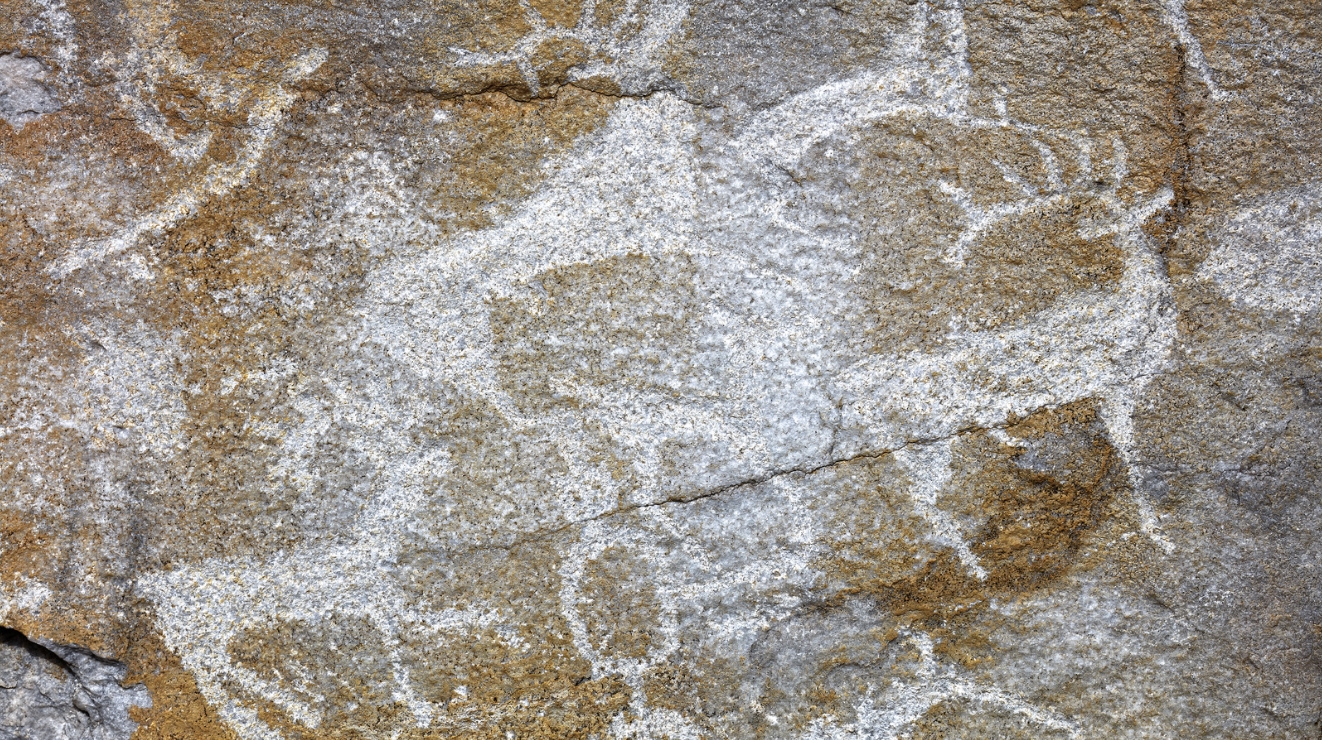
The Mesolithic period is the most prolific era for prehistoric rock art in India. The art provides a vivid record of the social and economic activities of the time.
- Subject Matter: Rock paintings, primarily found in central Indian rock shelters like Bhimbetka, depict hunting expeditions, gathering activities, group dances, animal life, and religious ceremonies.
- Technique: Paintings were executed on rock walls and ceilings using mineral pigments, predominantly red ochre (hematite), white, and yellow.
- Dynamic Style: Human figures are often represented as stick-like or stylized forms in active, energetic poses, highlighting the importance of community and social interaction.
Regional Variations
| Site | Region | Key Characteristics |
| Bagor | Rajasthan | Large scale, early evidence of animal domestication. |
| Adamgarh | Madhya Pradesh | Extensive microliths, evidence of cattle keeping. |
| Langhnaj | Gujarat | Human skeletal remains, bone tools, cemetery evidence. |
| Sarai Nahar Rai | Uttar Pradesh | Early evidence of burials and human stature studies. |
| Mahadaha | Uttar Pradesh | Evidence of organized burial grounds and shell jewelry. |
| Teri Sites | Tamil Nadu | Coastal microlithic scatters in red sand dunes. |
Key Facts and Trivia
- Mesolithic populations experienced physical and health changes due to a more varied diet. Osteological studies on remains from sites like Sarai Nahar Rai suggest that these humans were generally tall and robust.
- The presence of marine shells in inland Mesolithic sites indicates that early groups participated in long-distance exchange networks. Trade or movement allowed for the acquisition of exotic raw materials, which were then crafted into personal adornments.
- The transition to the Neolithic occurred at different times across the subcontinent. Some regions adopted settled agriculture as early as 7,000 BCE, while other groups maintained a purely Mesolithic hunter-gatherer lifestyle well into the second millennium BCE.
- Evidence of hearths in caves and open-air sites confirms that fire was fully mastered. It served critical functions in food preparation, warmth, protecting groups from wild predators, and perhaps as a center for social gathering during the long hours of darkness.
The shift to microlithic tools allowed Mesolithic populations to adapt to the warmer and more humid climatic conditions that emerged after the last glacial maximum. Denser vegetation and different faunal populations necessitated lighter, more efficient, and specialized tool kits compared to the heavy stone implements of the Palaeolithic era.