
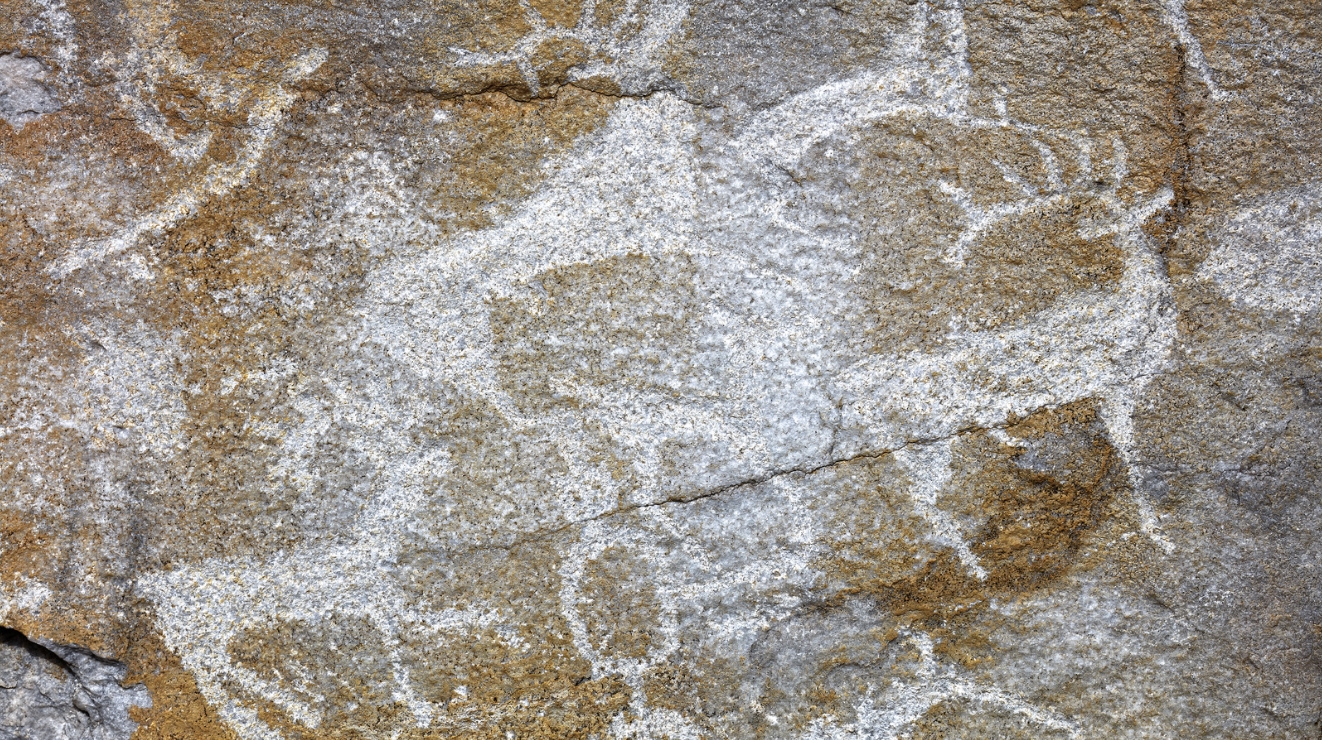
Holism, Cultural Universals and Culture Change
Holism in cultural anthropology is the study of a culture as a whole rather than focusing on its isolated parts. It assumes that social institutions like religion, politics, economy, and kinship are interconnected. To understand a specific social practice, one must examine its relationship with the broader cultural framework. For example, the food habits of a society cannot be separated from its religious beliefs, technological level, and environmental adaptation. This approach prevents simplistic explanations and emphasizes that culture is an integrated system.
Cultural Universals
Cultural universals are traits, patterns, or institutions that exist in every human culture. Despite immense diversity, all societies face similar fundamental challenges, leading to shared solutions. These universals reflect the shared biological and psychological needs of the human species.
Key Cultural Universals
- Communication: Every culture uses a complex language system to convey abstract thoughts and social information.
- Social Organization: Every society has mechanisms to organize individuals into groups, such as families or clans.
- Marriage and Kinship: Rules defining marriage, descent, and inheritance are present everywhere to ensure social continuity.
- Economic Systems: All cultures maintain methods for the production, distribution, and consumption of goods.
- Religious and Supernatural Beliefs: Every culture possesses beliefs about the nature of existence, death, and spiritual forces.
- Rituals and Ceremonies: Societies hold rituals to mark life-cycle transitions like birth, puberty, marriage, and death.
- Education: Methods of enculturation exist in every society to transmit knowledge and social norms to the next generation.
- Aesthetics: Forms of artistic expression, including music, dance, and personal ornamentation, are found in all cultures.
Drivers of Culture Change
Culture is dynamic and constantly evolves. Change occurs through internal processes and external interactions, leading to the modification of social norms and material practices.
Mechanisms of Change
- Invention: The creation of new ideas, products, or technologies from existing cultural elements. Examples include the discovery of agriculture or the invention of the printing press.
- Discovery: The realization and understanding of existing natural phenomena. The discovery of fire or the medicinal properties of plants led to massive shifts in human cultural patterns.
- Diffusion: The spread of cultural traits, ideas, or objects from one society to another through trade, migration, or communication. The adoption of tea or paper across continents is a classic example of diffusion.
- Acculturation: The process of extensive cultural borrowing and adaptation that occurs when two distinct cultures come into sustained, direct contact. This often involves the blending of traditions.
- Assimilation: A process where a minority group adopts the norms, values, and language of a dominant group, eventually becoming indistinguishable from them.
Cultural Lag
Cultural lag is a concept describing the imbalance between material and non-material culture. Material culture, such as technology, often advances rapidly. Non-material culture, consisting of values, laws, and beliefs, often changes at a slower pace. This gap creates social tension or dysfunction. For instance, the invention of social media platforms moved faster than the development of laws to regulate privacy and digital conduct.
Summary of Cultural Dynamics
| Term | Definition | Primary Driver |
| Enculturation | Learning one’s own culture | Socialization |
| Diffusion | Spread of traits between cultures | Contact |
| Innovation | Creation of new cultural elements | Internal creativity |
| Acculturation | Cultural change due to contact | Interaction |
| Cultural Lag | Disparity between material and non-material change | Differing rates of evolution |
Facts and Trivia
- The term holism was popularized in the twentieth century to describe the study of human societies in their entirety. Anthropologists study cultural universals to identify common human threads that bind diverse societies together.
- Cultural change is often resisted by a society if it threatens core values, a phenomenon known as cultural inertia. Globalization has increased the rate of cultural diffusion, leading to a phenomenon called cultural homogenization where some regional traditions are lost.
- However, it also leads to glocalization, where global products are modified to suit local tastes. The study of culture change is essential for understanding how societies survive ecological crises or political upheavals.
- Every culture has an inherent mechanism to filter or adapt foreign ideas to maintain its own unique identity.
Small-scale societies often maintain cultural traditions longer due to isolation, while large, urbanized societies tend to experience faster culture change due to high connectivity. Most cultural anthropologists agree that there is no culture that is entirely original; all cultures are built upon foundations borrowed or adapted from predecessors.

Sushma
August 7, 2015 at 10:51 amIndian Digital Marketing offers complete digital marketing solutions to its customers from Website Planning & Creation, Search Engine Optimization, Social Media Marketing, Email & Mobile Marketing, PPC Ads, Ecommerce Marketing, Content Writing, Google Analytics to Online Lead Generation.