
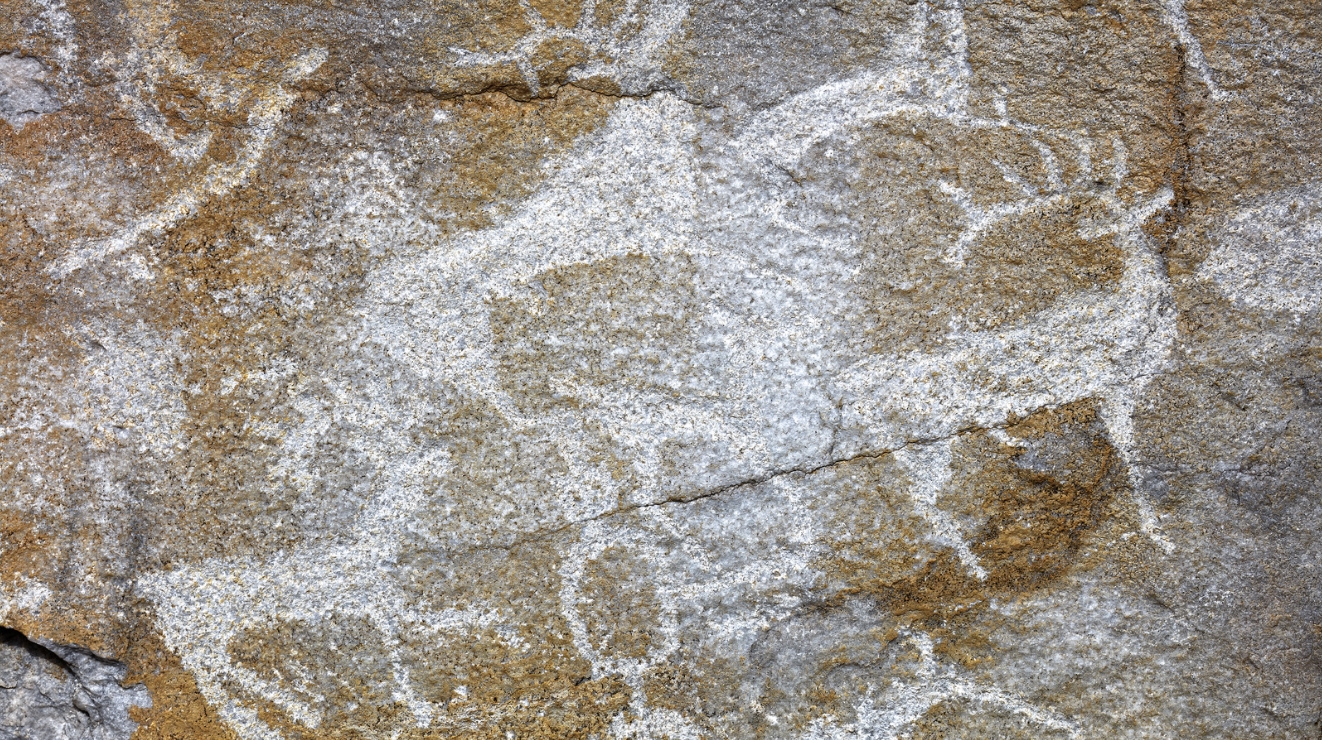
Azilian, Tardenoisean, Maglemosian, Kitchen Midden and Natufian Cultures
The Mesolithic period represents a transitional phase between the food-gathering Paleolithic and the food-producing Neolithic. During this era, human populations adapted to post-glacial environments by developing specialized tool kits known as microliths. These stone tools allowed for efficient hunting, fishing, and plant processing. Several distinct cultural complexes emerged across Europe and the Near East during this time, each reflecting local environmental adaptations.
Azilian Culture
The Azilian culture followed the Magdalenian industry in southwestern France and northern Spain. It is considered one of the earliest Mesolithic industries in Europe.
Cultural Characteristics
- The industry is named after the site of Mas d’Azil in the French Pyrenees.
- Azilian tools include small, flattened harpoons made of red deer antler, which are distinct from the complex barbed harpoons of the Magdalenian.
- Stone tools are characterized by small, crudely retouched blades and scrapers.
- A notable feature of this culture is the production of painted pebbles, marked with dots, stripes, or other abstract symbols using red ochre.
- The presence of these painted pebbles suggests the development of symbolic or ritualistic behaviors during the early Holocene.
Tardenoisean Culture
The Tardenoisean culture was widely distributed across central and western Europe, particularly in France, Belgium, and England.
Technological Features
- This culture is identified by its standardized microlithic tool kit, especially geometric forms.
- Typical artifacts include triangles, trapezoids, and crescents, which were used as arrowheads or insets for composite tools.
- Tardenoisean populations relied on hunting forest game and foraging for wild plants.
- These tools were often hafted into wooden shafts with resins to create efficient hunting projectiles.
- The standardized nature of these microliths indicates a high level of technical efficiency and craftsmanship.
Maglemosian Culture
The Maglemosian culture occupied the marshy, forested regions of northern Europe, particularly around the Baltic and North Seas, during the early Holocene.
Adaptation and Subsistence
- The name Maglemosian means great bog, referring to the waterlogged sites where these artifacts were recovered.
- Because of the anaerobic, waterlogged environment, organic materials like wood, bone, and antler have been preserved, providing a rare glimpse into Mesolithic daily life.
- Their tool kit includes bone fishhooks, leisters for fishing, and wooden paddles for canoes.
- Maglemosian hunters used dogs for hunting, providing some of the earliest evidence of canine domestication in Europe.
- They lived in seasonal camps near lakes and rivers, moving according to the availability of migratory fish and forest animals.
Kitchen Midden Culture
Kitchen middens are large mounds of refuse, primarily composed of discarded shells, animal bones, and charcoal, left behind by coastal Mesolithic populations. This culture is best represented by the Ertebolle culture in Denmark and southern Scandinavia.
Cultural Significance
- Middens serve as a direct record of the diet and environmental exploitation of coastal human groups.
- They reveal a heavy reliance on marine resources, including mollusks, fish, seals, and coastal birds.
- Excavations show that these coastal groups maintained semi-permanent settlements.
- These sites provide evidence of the earliest pottery in northern Europe, often in the form of large, pointed-base ceramic vessels.
- The accumulation of these mounds over centuries indicates that human groups returned to the same coastal spots repeatedly.
Natufian Culture
The Natufian culture existed in the Levant region of the Near East from roughly 12,000 to 9,500 years ago. It is famous for being the precursor to the Neolithic transition to agriculture.
Sedentary Lifestyle
- Natufians were the first group to establish permanent, sedentary villages before the widespread adoption of farming.
- They built semi-subterranean circular houses with stone foundations.
- Their tool kit includes specialized microliths like lunate blades, which were used as insets in sickles for harvesting wild cereals.
- They practiced intensive collection of wild wheat and barley, which eventually led to the domestication of these crops.
- Burial practices were elaborate, often including personal ornaments made of dentalium shells, bone beads, and stone pendants.
- Natufian sites like Ain Mallaha and Jericho provide clear evidence of the shift toward a settled, food-producing way of life.
Comparative Overview of Mesolithic Complexes
| Culture | Primary Region | Defining Feature |
| Azilian | France/Spain | Painted pebbles and flat harpoons |
| Tardenoisean | Central/Western Europe | Geometric microliths |
| Maglemosian | Northern Europe | Bone fishhooks and canoe paddles |
| Kitchen Midden | Coastal Scandinavia | Shell and bone refuse mounds |
| Natufian | Levant | Sedentism and wild cereal harvesting |
Historical Facts and Observations
- The term microlith refers to small, standardized stone tools that were essential for the Mesolithic way of life. Geometric microliths, such as triangles and crescents, allowed humans to create effective composite weapons.
- The development of the bow and arrow is a defining technological leap of the Mesolithic, made possible by the production of tiny, sharp stone points. Pottery production began in several regions during the late Mesolithic, often to store processed marine resources or wild grains.
- The transition from mobile hunting to sedentary life in the Natufian culture was driven by the high productivity of wild cereal stands in the Levant. Many Mesolithic sites demonstrate the importance of the dog, which was the first animal to be domesticated by human groups.
The preservation of wooden objects at sites like those in the Maglemosian region has proven that these groups were expert woodworkers, producing bows, arrows, and complex fishing equipment. The rise of coastal middens is linked to the post-glacial sea-level rise, which created productive tidal and estuarine environments. Researchers use the study of dental microwear on human teeth from these sites to understand the transition in diet from tough, abrasive wild foods to softer, processed cereals.

devansh
April 27, 2015 at 7:29 pmthe answer should be SBI, which provided loan for women at 9.85%, by deducting 10 base points
Swati
May 13, 2015 at 12:42 amThe loan product ‘Women Power’ is offered by HDFC at an interest rate of 9.85% to women customers. So the answer is HDFC and not SBI.
arwindsharma
May 2, 2016 at 1:08 pmAbsolutely the new home loan product “Women power” offered by HDFC bank at an low interest rate. But in course of my knowledge Bajaj Finserv also provide a foremost rate of interest for home loan.Check here about the interest rate:
https://www.bajajfinserv.in/finance/home-loan/salaried-home-loan-fees-and-interest-rates.aspx