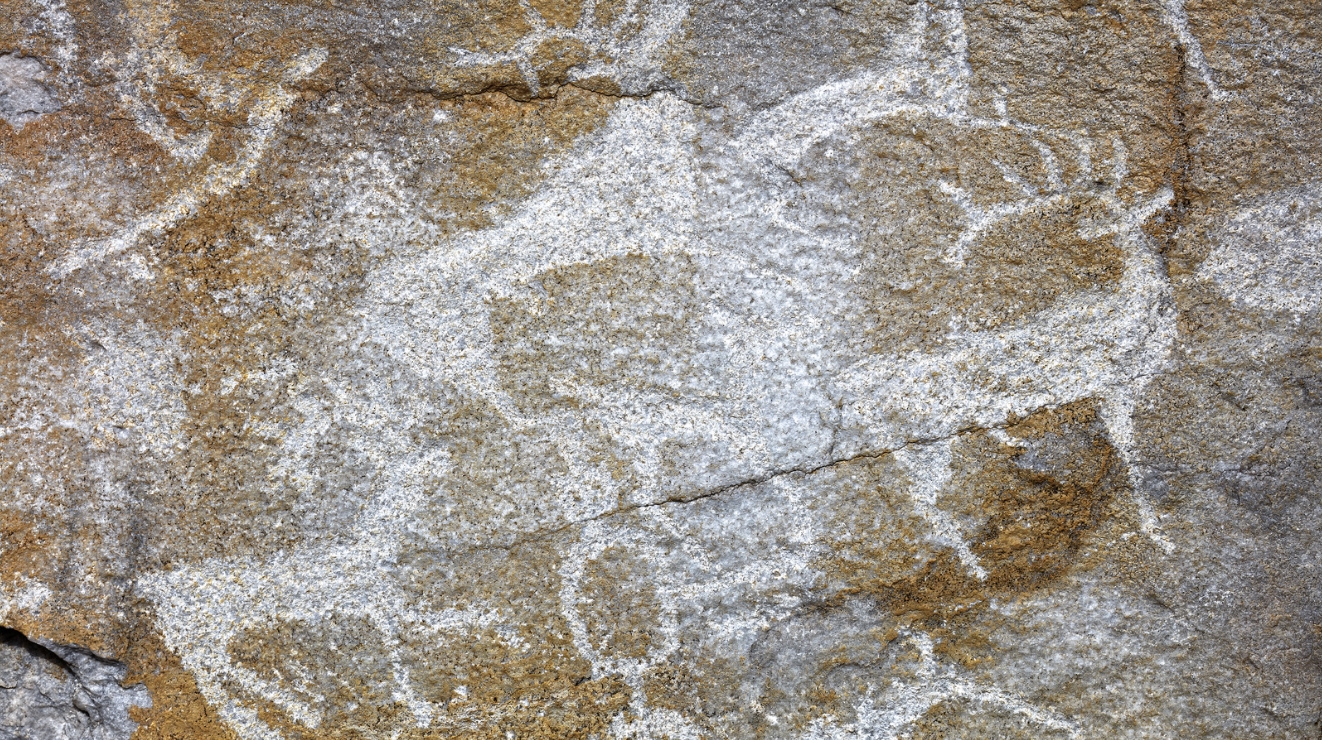
Environmental, Settlement, Cognitive and Geo-Archaeology
Environmental archaeology focuses on the interaction between humans and their past environments. It uses biological and geological data to reconstruct ancient climates, landscapes, and ecosystems.
Core Components
- Zooarchaeology examines animal remains such as bones, teeth, and antlers to identify species, hunting patterns, and domestication levels.
- Archaeobotany analyzes plant remains, including seeds, charcoal, and pollen, to determine dietary habits and agricultural practices.
- Palynology, the study of fossilized pollen grains, is crucial for tracking vegetation changes and reconstructing paleoclimatic conditions over millennia.
- Isotopic analysis of human or animal teeth provides information on diet and migration patterns by measuring the chemical signatures of consumed resources.
Settlement Archaeology
Settlement archaeology investigates how people organized their living spaces, ranging from single households to entire urban centers. It analyzes the distribution, size, and layout of sites to understand social complexity and resource management.
Analytical Dimensions
- Site Catchment Analysis evaluates the resources available to a community within a specific radius, helping define economic strategies.
- Central Place Theory is used to understand the spatial distribution of settlements and their hierarchy based on economic and political influence.
- Household archaeology focuses on the smallest unit of social organization, examining domestic activity areas to infer gender roles, status differences, and family structure.
- Urbanism studies the development of dense, complex settlements characterized by specialized labor, administrative hierarchies, and public architecture.
Cognitive Archaeology
Cognitive archaeology seeks to understand the mental processes of past humans. It explores how ancient people perceived their world, developed symbols, and formed religious or social ideologies.
Methods of Inquiry
- Symbolic Material Culture involves analyzing art, rituals, and burial practices to identify abstract thought and belief systems.
- Ideology and Power are investigated by looking at monumental architecture, such as temples or palaces, which reflect the social values and political control of an era.
- Art and Ornamentation, including cave paintings, figurines, and jewelry, serve as primary evidence for cognitive developments like language and self-awareness.
- The transition from tool-making to complex aesthetic expression is a central focus in measuring the evolutionary development of the human mind.
Geo-Archaeology
Geo-archaeology applies geological concepts to archaeological research. It analyzes the soil, sediment, and natural landforms to understand the formation and preservation of archaeological sites.
Key Applications
- Stratigraphy involves the study of layered deposits to determine the chronological order of human occupation.
- Site Formation Processes identify how natural forces like floods, erosion, and wind affect the burial and displacement of artifacts.
- Soil Micromorphology examines thin sections of soil under a microscope to detect microscopic evidence of human activity, such as waste disposal or floor construction.
- Geomorphology helps in mapping ancient coastlines and river channels, providing context for why specific locations were chosen for settlement.
Comparison of Archaeological Approaches
| Approach | Primary Data Source | Research Goal |
| Environmental | Pollen, bones, plant remains | Reconstruct past ecosystems |
| Settlement | Site maps, architectural ruins | Analyze social organization |
| Cognitive | Art, burials, ritual items | Understand human belief systems |
| Geo-Archaeology | Soil, sediments, landscape | Understand site formation |
Essential Facts and Trivia
- The study of phytoliths, which are silica structures found in plants, allows researchers to identify crops like rice and wheat even when the plants themselves have decayed. This method is particularly effective in tropical environments where organic preservation is poor.
- LiDAR technology has transformed settlement archaeology by using laser pulses to map ground topography through thick vegetation. This technology revealed thousands of previously unknown structures in the Maya lowlands and the Amazon basin.
- The concept of the Cognitive Revolution, often dated to around 50,000 years ago, is frequently linked to the sudden appearance of complex tools, personal ornaments, and cave art in the archaeological record.
- Coprolites, or fossilized excrement, are goldmines for environmental archaeologists. They contain undigested food remains, seeds, and even parasites, providing a direct record of an individual’s diet and health status.
- Archaeomagnetism is a technique used in geo-archaeology. It measures the orientation of magnetic minerals in baked clay, such as kilns or hearths, to determine the date the object was last fired, as the Earth’s magnetic field changes over time.
- Landscape archaeology treats the entire physical environment as an artifact. It moves beyond individual sites to look at how humans modified the environment through terraces, irrigation canals, and road systems over hundreds of years.
The study of micro-refuse in household archaeology involves sifting soil in extreme detail to find tiny fragments of stone, bone, or pottery. This data helps identify specific activity areas, such as where food was prepared versus where tools were manufactured within a single hut.